
Some days just feel heavier than they should. Nothing is clearly wrong. You’re doing your usual things – talking to people, going through your routine – but something still feels off. You feel mentally tired, a little disconnected, and maybe more irritable than usual.
And most of the time, you don’t even talk about it. You just assume it’s stress or a phase that will pass. But when that feeling stays for a while, it usually points to something deeper: your emotional health.
In this blog, we’re going to understand what emotional health really means, how it shows up in everyday life, what affects it, and how you can improve it naturally without overcomplicating it.
What Emotional Health Really Means
Emotional health is really about how you deal with your feelings every day. It’s not about staying positive all the time. You’ll still feel stressed, upset, or low sometimes, and that’s normal. The difference is that those feelings don’t completely take over. You’re able to understand them, express them, and slowly move through them instead of feeling stuck in them for too long.
Signs of Good and Bad Emotional Health
Signs of Good Emotional Health
- Self-awareness
You’re able to notice what you’re feeling instead of ignoring it. And you actually try to handle it.
- Resilience
Things still go wrong, but they don’t break you. You take time, process it, and slowly come back to normal.
- Healthy relationships
You feel comfortable around people. You can talk, share, and stay connected with them.
- Expressing emotions
You don’t keep everything inside. You find small ways to let things out, whether it’s talking, writing, or just being honest.
- Setting boundaries
You don’t agree to everything just to avoid guilt. You’re able to protect your space when something doesn’t feel right.
- There’s a sense of calm most days
Things feel a little steadier and more balanced, not perfect but calm.
Signs of Bad Emotional Health
- You start pulling away
You don’t feel like being with people, so you avoid them and isolate yourself from friends or family.
- Overthinking
You keep thinking about the same things; your mind keeps going back to the same worries, doubts, or heavy thoughts.
- You feel Low on energy
Even without doing much, you feel low on energy. Sleep doesn’t feel enough.
- It’s hard to focus
Simple things take more effort, and your mind feels scattered.
- You avoid what you’re feeling
Instead of dealing with your emotions, you distract yourself so you don’t have to think about them.
- Ignoring your own self
Small things like rest, routine, or even basic self-care can start to slip without you realising.
For many people, these symptoms of emotional health can also overlap with things like hormonal imbalance in women, where emotional shifts feel even harder to manage.
What Affects Emotional Health (More Than You Realise)
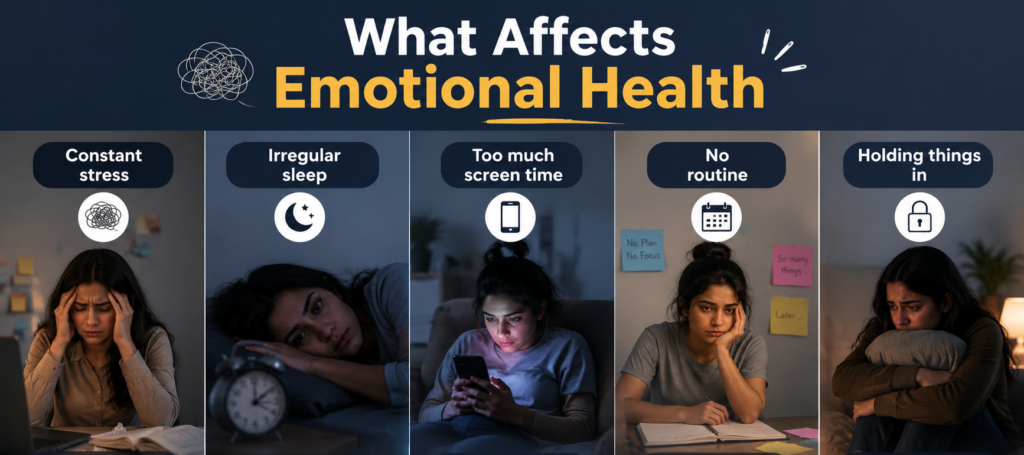
Most of the time, it’s not one big reason. It’s the small, everyday things that build up quietly.
- Constant stress
When stress becomes part of your routine, you stop noticing it. You just feel a little tense all the time, and it gets harder to actually reduce stress.
- Irregular sleep
Late nights or poor sleep can throw off your whole day. When you’re not well-rested, even small things feel harder to handle.
- Too much screen time
Your brain never really stops working. It keeps busy by constantly scrolling, which makes it harder to relax.
- No routine
Without any proper routine, your mind stays confused. That lack of structure slowly affects your balance.
- Holding things in
When you don’t express what you feel, it builds up. Over time, it adds to your stress without you even realising it.
Once you notice these patterns, it becomes easier to figure out how to relieve stress.
How to Improve Emotional Health Naturally
You don’t need to change everything at once. Small, consistent shifts can help you reduce stress and anxiety more naturally.
- Slow down a little
You don’t have to be “on” all the time. Even short breaks during the day give your mind space to settle and relieve stress.
- Express yourself
Share your emotions with someone, write them down, or just sit with your thoughts for a while. It helps you process what you’re feeling instead of carrying it.
- Fix your sleep routine
Better sleep makes a bigger difference than it seems. A well-rested mind and body can easily handle emotions and reduce stress naturally.
- Stay physically active
You don’t have heavy workouts; just a short walk or light movement can help release built-up tension and improve your mood.
- Create a simple routine
When your day has some structure, your mind feels more settled. It helps bring a sense of balance back.
- Give yourself time
You won’t feel better overnight, and that’s okay. When you stay consistent, it becomes easier to reduce stress and anxiety.
What You May Start Noticing Over Time
At first, the change is small. You feel calmer without getting easily bothered. Your energy stays steadier throughout the day, and your thoughts feel clearer and easier to manage. You handle situations more easily. It’s not a big shift, just a simple feeling that things are getting better.
Conclusion
Emotional health isn’t something you fix in a day. It’s something you build through small, consistent changes in how you treat yourself. You don’t need to do everything. You don’t need perfect routines. Just a little more awareness. A little more space. A little more honesty with how you feel.
And if you’ve been keeping things to yourself for a while, it might help to talk about it openly. You can always reach out on Khul Ke Pucho, because sometimes, just understanding what you’re feeling is the first step toward feeling better.