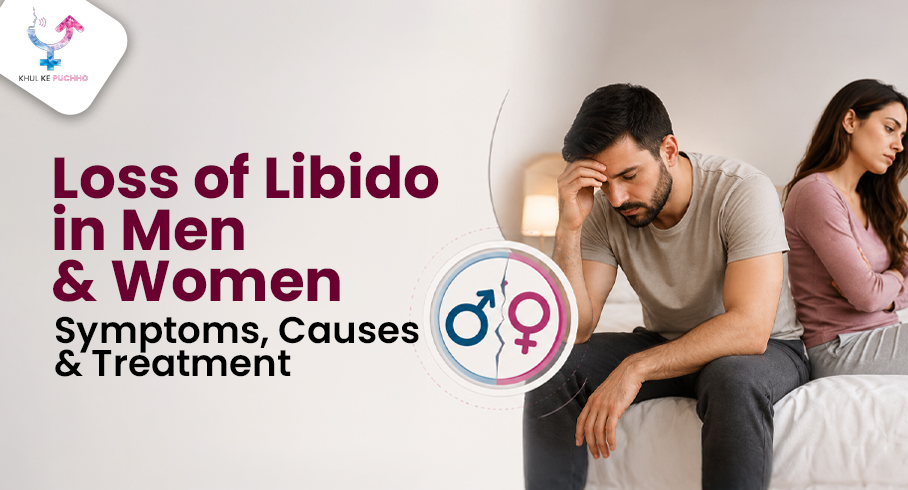
Sometimes things just don’t feel the same anymore. The interest is lower, the energy isn’t there, or you just don’t feel as connected as before.
A lot of people go through this phase, but don’t really talk about it. It gets ignored, brushed off, or blamed on stress for a while. But when it stays for longer, it starts raising questions.
Loss of libido isn’t something that happens to only a few people. It can affect both men and women at different stages of life. And in most cases, it doesn’t show up suddenly; it builds slowly.
In this blog, we’ll look at what this really feels like, why it happens in men and women, and what people usually do to deal with it.
What Does Loss of Libido Actually Feel Like?
It’s easy to think of it as just “low interest,” but it’s usually more than that.
For some people, it feels like a drop in desire. For others, it shows up as low energy, lack of excitement, or even a kind of emotional distance. You might still care about your partner, but the natural interest just doesn’t come as easily.

This is where it connects with broader sexual health issues. It’s not just about one moment or one situation; it’s often a mix of how your body feels, how your mind is working, and what your daily routine looks like.
Common Signs of Loss of Libido
Some signs that often get ignored:
1. Low sexual desire
2. You avoid situations that might turn intimate
3. You feel low on energy most of the time
4. You feel a bit mentally distant
What Causes Loss of Libido in Men and Women?
Before trying to fix it, it helps to understand what causes low sex drive.
Loss of libido does not happen due to just one reason. It’s usually a mix of physical, mental, and lifestyle factors, and these can be a little different for men and women.
Causes of Loss of Libido in Men
1. Sometimes it’s just a drop in energy or hormones, especially testosterone, which quietly affects interest.
2. Work pressure or performance stress can stay in the back of the mind and slowly kill the mood.
3. Sexual dysfunction in Men can also be the cause.
4. Habits like drinking, smoking, or an irregular routine affect sexual health.
5. Health issues like diabetes or poor blood flow can also play a role in the loss of libido.
Causes of Loss of Libido in Women
1. Hormonal changes at different stages (like periods, pregnancy, or menopause) can shift how the body feels.
2. Being mentally tired all the time, handling work, home, everything together, can leave no space for desire.
3. Sometimes it’s emotional more than physical; if the mind isn’t relaxed, the body doesn’t respond the same way.
4. Discomfort or dryness during intimacy can make someone naturally avoid it.
5. Changes in the relationship, even small ones, can affect closeness for women more than people realise.
How Loss of Libido Affects Daily Life and Relationships
It doesn’t just stay limited. You might notice that your confidence drops. Not just in your personal life, but in general as well. There may be hesitation, even in circumstances unrelated to intimacy.
It can create a bit of distance in a relationship. Not always in an obvious way, but in small things like talking less, not feeling as comfortable, or having that sense about something that is not right.
Then comes the part that stresses you out. The problem is stressful, and that stress makes the problem worse. It becomes a loop that is hard to get out of unless you take a step back and look at the whole picture.
Treatment Options: What People Usually Consider
When people start noticing consistent changes, they usually explore a few options. Some people get medical help if they feel something is off physically. This can include medication or treatment for underlying conditions. Some go for therapy or counseling. Stress, anxiety, and relationship concerns can have a strong impact, and talking to someone often helps bring clarity.
In many cases, addressing the root cause becomes more important than just looking for a quick fix. That’s why approaches to sexual health problems are often a mix of physical and mental support.
Can Loss of Libido Be Managed Naturally?
Small changes that happen every day can make a big difference in a lot of cases. One of the easiest and most effective things you can do is to get better sleep. Everything else works better when the body is well-rested. It also helps to deal with stress. You don’t have to do anything complicated; even short breaks or simple routines can help lighten your mental load. Getting enough sleep, eating healthy meals, dealing with stress, and staying active all help the body stay in balance.
It’s not about getting everything right. It’s all about being consistent.
When Should You Pay Attention?
It’s usually not a big deal if it happens once in a while. But if it keeps happening, starts to hurt your relationship, or starts to hurt how you feel mentally, you should pay attention. Not everything needs to be done right away, but ignoring it completely doesn’t help most of the time.
Conclusion
Most of the time, loss of libido doesn’t come from one big reason. It builds slowly through stress, routine, lifestyle, or changes in the body. The good part is that awareness itself is a strong first step. When you start noticing these changes early, it becomes easier to manage them before they grow bigger. It’s not always about fixing everything at once. Sometimes it’s just about getting back to what feels normal for you.
If you are experiencing a constant loss of libido, you shouldn’t ignore it. You can talk to an expert through Khul Ke Pucho; they can help you understand your issue openly and suggest the right treatment according to your requirements.