
Many men notice a change in their erections but do not speak of it. Shame and social stigma often delay medical advice. As a result, months or even years may pass before a man seeks help.
The problem is widespread. A hospital study in Jammu examined 348 men with type 2 diabetes. It found erectile dysfunction in 216 of them, which is 62.08%. However, the study covered one hospital and diabetic men only. Its findings therefore do not describe all men.
Early notice improves the chance of timely care. This blog describes each erectile dysfunction symptom in clear terms. It also covers causes, daily habits and Ayurvedic support.
What Is Erectile Dysfunction?
Erectile dysfunction (ED) means regular difficulty in getting or keeping an erection that is adequate for sexual activity. A single episode is common. Stress, fatigue, or lack of sleep can cause it. The condition becomes a concern when it persists.
Erection problems in men are more common than many assume. In many cases, they are also treatable, and early care helps. Erectile dysfunction ke lakshan often develop gradually, so we describe the early signs below. Do you have a health question that is difficult to discuss?
7 Early Signs of Erectile Dysfunction (ED)
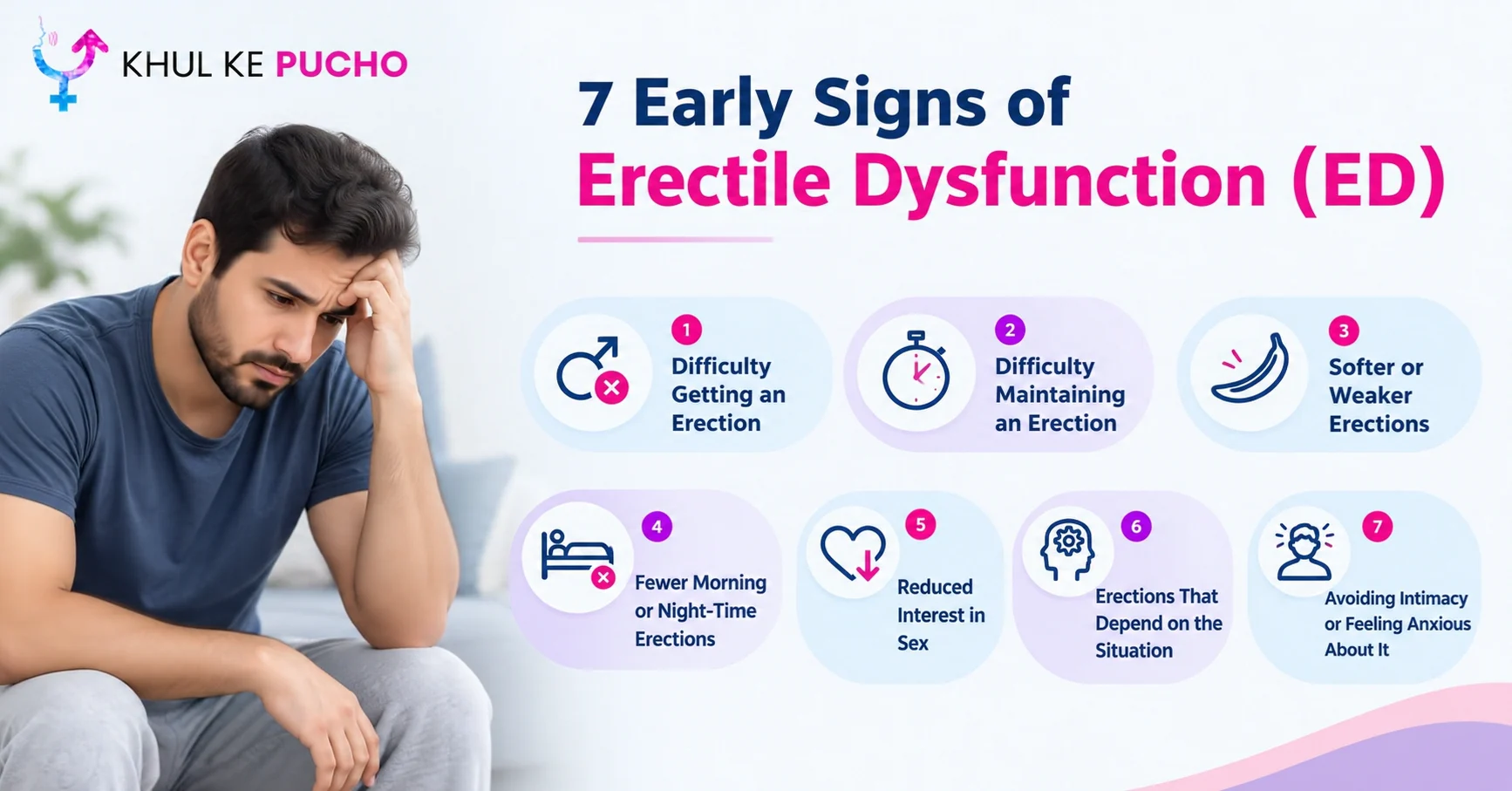
Noticing an erectile dysfunction symptom early allows more time for care. The seven signs below are the most common.
1. Difficulty Getting an Erection
A man may feel aroused, yet the erection develops slowly or not at all. This can occur when blood flow to the penis is reduced. Stress and fatigue can also interfere. Some men notice that more time or stimulation is needed than before. A repeated pattern should be noted.
2. Difficulty Maintaining an Erection
The erection begins but fades before or during intimacy. In fact, many men notice this sign first. It may point to reduced blood flow, nerve changes or worry. A single episode after a long day is not rare. A repeated pattern, however, needs care. Body and mind both play a part, so both should be considered.
3. Softer or Weaker Erections
The erection occurs but is less firm than before. A slow change of this kind is easy to miss. Some men link it to age. However, age alone does not explain every change. A steady decline over weeks or months is significant. Keeping a simple record helps to show the pattern.
4. Fewer Morning or Night-Time Erections
Most healthy men have erections during sleep and on waking. These show that blood flow and nerves work well. A clear drop in them is therefore a useful early clue. It may point to physical causes, such as diabetes or low hormone levels. Doctors often ask about them for this reason.
5. Reduced Interest in Sex
Desire and erections are closely linked. Stress, low mood, poor sleep and hormone changes can all reduce desire. As a result, interest and erections may fall together. A man may notice that he thinks about sex less often. This sign matters even when it seems small.
6. Erections That Depend on the Situation
Erections may be normal when a man is alone but not with a partner. This pattern often points to stress or performance worry. It is a common sign and not a lesser one. For example, morning erections may be normal while erections with a partner are not. Open talk often helps.
7. Avoiding Intimacy or Feeling Anxious About It
After a few poor experiences, some men begin to avoid intimacy. Worry about performance then makes erections harder to achieve. Over time, this forms a cycle. Partners may also feel confused or hurt, which adds to the stress. Naming the cycle is the first step toward ending it.
One sign alone does not confirm a diagnosis. However, signs that repeat are among the early signs of ED that need attention. These signs also matter for overall health.
Have you noticed one or more of these signs? Speak to our experts.

Why These Signs Matter for Your Overall Health
Erections depend on healthy blood vessels, nerves, hormones, and a calm mind. A change in erections may therefore point to a wider health issue. Doctors often regard it as one of the erectile dysfunction warning signs of conditions such as diabetes or heart disease. Diabetes can damage the small blood vessels and nerves that control erections. One explanation is that the arteries of the penis are small, so they may show changes first.
Did you know? A meta-analysis of 12 studies followed 36,744 men. Men with ED had a 48% higher risk of cardiovascular disease. However, these studies were observational. They show a link not a cause.
Chest pain, breathlessness, or leg pain while walking needs prompt medical care. Because erectile dysfunction signs in men can reflect wider health issues, the causes should be understood.
Common Causes of ED
Erection problems in men rarely have a single cause. Many factors usually act together.
- Diabetes, high BP and high cholesterol: These conditions damage blood vessels and nerves.
- Excess weight and low physical activity: Both reduce blood flow.
- Smoking and alcohol: Smoking harms blood vessels, and excess alcohol dulls the response.
- Stress, worry and low mood: The mind strongly influences erections.
- Poor sleep: It disturbs hormones and energy levels.
- Certain medicines and hormonal changes: Certain medicines and hormonal changes can also affect erections.
In the Jammu study, older age, smoking, high BP and long-standing diabetes were linked with ED. Many causes may lie behind erectile dysfunction symptoms, and most respond to healthy daily habits.
Daily Habits That Support Healthy Erections
Small, steady habits protect blood flow, hormones, and mood. These measures help.
- Daily walking: A brisk 30-minute walk is a suitable start. Exercise improves blood flow and mood.
- Whole foods: Fruits, vegetables, nuts, seeds, and whole grains support healthy weight, blood sugar, and cholesterol.
- Weight management: Even a small reduction helps.
- Adequate sleep: A fixed sleep time is useful because poor sleep lowers energy and desire.
- Avoiding tobacco and limiting alcohol.
These habits form the foundation and Ayurveda adds a structured layer of support.
How Ayurveda Helps With Erectile Dysfunction
Ayurveda regards erectile dysfunction as a symptom of the whole body. It describes the condition as ‘Klaibya’ (weak sexual function) or ‘Dhwajabhanga’. It links it to weak Shukra Dhatu (reproductive tissue), stress, poor sleep and weak digestion.
Khul Ke Pucho follows this Ayurvedic approach. It is a wellness platform where people can ask health questions openly and connect with experts. The team considers the whole person, including sleep, stress, digestion, and food, and not only the symptom. Khul Ke Pucho offers this approach:
Vajikarana: The Ayurvedic Therapy for Sexual Health
Vajikarana is the branch of Ayurveda that deals with sexual health, strength, and vitality. It is not a single treatment. It is a complete therapy that combines Panchakarma, herbs, diet, and lifestyle. Its traditional aim is to nourish Shukra Dhatu and restore balance. The four parts are described below.
- Panchakarma
Panchakarma consists of cleansing therapies such as Virechana (therapeutic purgation) and Basti (herbal enema). In Ayurveda these therapies clear accumulated Ama (undigested waste) and prepare the body for herbs. Abhyanga (herbal oil massage) and Shirodhara (warm oil poured over the forehead) often accompany them for relaxation and better sleep.
- Herbal Support
Gokshura, Ashwagandha, Shilajit, Safed Musli and Kaunch Beej are used in Ayurveda to support strength, stamina and calm. A 2021 systematic review of 42 placebo-controlled trials found promising results for some herbs. Tribulus terrestris known as Gokshura, helped in 2 of 2 single-herb trials.
- Diet
Ayurveda favours fresh, warm and nourishing vegetarian meals. Soaked almonds, dates, seeds and milk-based dishes are traditional choices. Fixed meal times also support digestion, which Ayurveda regards as the base of strength. Heavy, oily and packaged food is best kept low because it burdens digestion.
- Lifestyle
A steady routine and enough sleep matter. Yoga, Pranayama and meditation help to ease stress and worry, which affect erections. Ayurveda also advises fixed meal and sleep times so that the body keeps a steady rhythm.
Vajikarana works best as supportive care alongside expert advice. Would you like to know how Ayurveda supports erectile health? Ask your question openly with Khul Ke Pucho today.
Conclusion
Erectile dysfunction often begins with small changes that are easy to miss. Noticing an erectile dysfunction symptom early gives a man more options than delay. Steady habits, enough sleep and a calm mind support health. And Ayurveda offers a whole-person approach.
Take the first step by asking our experts, privately and without judgement. Book an consultation to connect with Khul Ke Pucho experts from home.

FAQs
Q1. What are the first signs of erectile dysfunction?
Common first signs include difficulty getting or keeping an erection, softer erections and fewer morning erections.
Q2. Can young men have erectile dysfunction?
Yes. Stress, poor sleep, worry and lifestyle habits can affect erections at any age.
Q3. Is occasional trouble with erections normal?
Yes. Fatigue, stress or a late night can cause an occasional episode. It becomes a concern when it persists.
Q4. Can stress cause erection problems?
Yes. Stress and worry can affect erections even when the body is healthy.