
Low testosterone builds slowly in many men. Common changes include a lower sex drive, less energy, and a low mood. Most men blame age, work, or stress. Yet a hormone problem may also play a part. Thus, men should know the signs of low testosterone in men and when to seek advice.
The problem is not rare in India. One study of 900 Indian men with type 2 diabetes found that 186 of them, or 20.7%, had low testosterone. This figure covers only men with diabetes. Still, it shows that low testosterone is common in this group.
This blog covers seven common signs, the main causes, and daily habits that help. It also explains the Ayurvedic view of low testosterone.
What Is Low Testosterone in Men?
Testosterone is the main male sex hormone. The testicles make most of it. It helps sex drive, muscle, bone strength, energy, mood, and sperm production.
Low testosterone in men means that the body makes less of this hormone than it needs. Doctors also call this testosterone deficiency. Levels fall slowly with age. Still, an early or steep fall can cause low testosterone symptoms. These can affect daily life. Some men also have low levels without clear symptoms. Thus, only a blood test can confirm the level.
The next section lists the signs that men notice most often.
7 Signs of Low Testosterone in Men
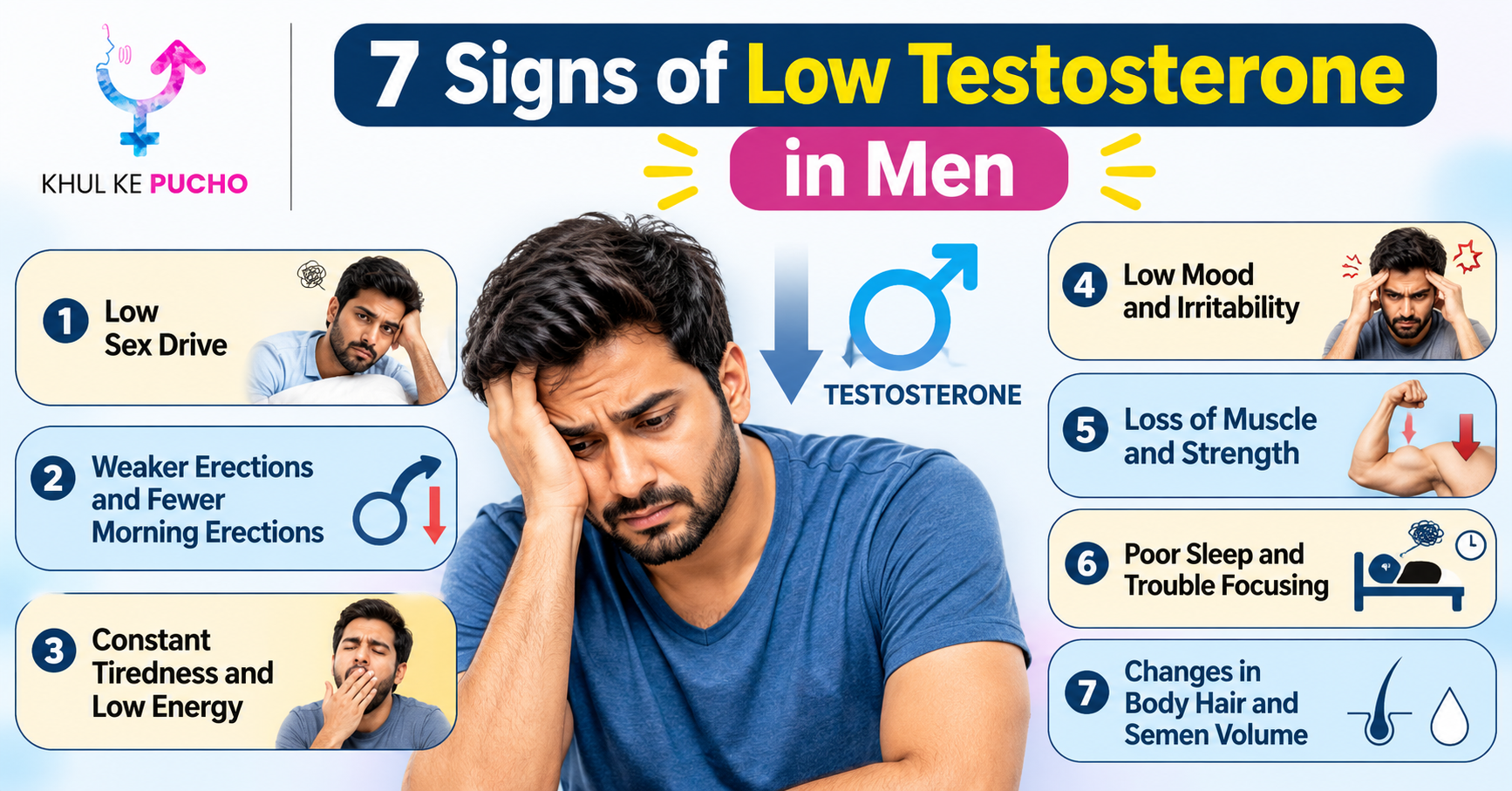
The signs of low testosterone in men can affect sexual health, the body, and the mind. A man may not have all of them. Still, these seven low testosterone signs need a closer look when they last for a few weeks.
1. Low Sex Drive
A steady fall in sexual desire is one of the clearest signs. A man may think about sex less often or lose interest in intimacy. Still, a fall that lasts for months without a clear cause needs a closer look. The hormone helps drive desire, so low levels often reduce it first.
2. Weaker Erections and Fewer Morning Erections
The hormone also helps the erection process. Thus, men with low levels may find it hard to get or keep an erection. They may also see fewer morning erections. Research links this sign closely to low testosterone. Yet diabetes, heart disease, and stress can also cause erection problems. For this reason, a proper check is key.
3. Constant Tiredness and Low Energy
Men with low levels often feel tired, even after a full night of sleep. Daily tasks begin to feel heavy. Yet many other things can cause fatigue, such as poor sleep, anaemia and thyroid problems. Thus, long-lasting fatigue needs a blood test.
4. Low Mood and Irritability
Low testosterone can change mood. Some men feel sad, low, or irritable for no clear reason. Many things can change mood, including stress and depression.
5. Loss of Muscle and Strength
The hormone helps the body build and keep muscle. When levels fall, muscle and strength may drop, even if a man trains as usual. Some men also gain fat around the belly. Bone strength may also weaken over time if low levels last.
6. Poor Sleep and Trouble Focusing
Some men with low levels sleep poorly or wake often. Others find it hard to focus or recall small details. The link between sleep and the hormone works both ways, because poor sleep can also lower testosterone. For this reason, good sleep habits matter in every case.
7. Changes in Body Hair and Semen Volume
The hormone also shapes body hair and sperm production. Over time, low levels may thin facial or body hair. Some men see a smaller semen volume or smaller testicles.
Want a daily routine that suits your body? Speak with our experts.

Did you know? A survey of more than 3,000 men aged 40 to 79 across Europe linked nine symptoms to lower testosterone. Yet only three sexual symptoms were strongly tied to low levels. These were fewer morning erections, fewer sexual thoughts, and erectile dysfunction. Fatigue and low mood were also common in men with normal levels.
Many of these signs have more than one cause. Thus, the next section looks at what can lower testosterone.
What Causes Testosterone Deficiency?
Several factors can lower testosterone. Knowing them explains why low testosterone signs appear.
- Ageing: Levels fall slowly as men grow older.
- Excess weight: Extra body fat changes how the body handles hormones. As a result testosterone may fall.
- Type 2 diabetes: High blood sugar is closely linked to low testosterone, as the Indian study above shows.
- Long-term stress: Constant stress raises cortisol, which can block testosterone production.
- Poor sleep: Short or broken sleep can lower testosterone levels.
- Alcohol and smoking: Heavy drinking can lower testosterone. Smoking also adds strain to the body.
- Long-term health conditions: Kidney disease, liver disease and other chronic illnesses can also change hormone levels.
The next section looks at daily habits that help change many of these causes.
Daily Habits That Support Healthy Testosterone Levels
Simple habits help hormone health and overall well-being.
- Sleep on a fixed schedule: Aim for seven to eight hours at set times.
- Exercise often: Strength training and brisk walks help muscle, weight control and energy.
- Eat a balanced vegetarian diet: Include nuts, seeds, pulses, fruits and vegetables.
- Manage stress: Yoga, pranayama and short breaks lower daily tension.
- Limit alcohol and avoid tobacco: Both strain the body and can affect hormones.
- Keep a healthy weight: Slow weight loss lowers the load on the body.
Still, these habits do not replace a check-up when the signs last.
When to Get Checked for Low Testosterone
Long-lasting signs of low testosterone in men need a check-up. If two or more signs last for a few weeks, a doctor can order a morning blood test. The test measures total testosterone. The doctor then reads the result with the symptoms. The doctor may also check blood sugar and thyroid function.
Once the cause is clear, many men look for added care. In this context, Ayurveda offers one useful view.
The Ayurvedic View of Low Testosterone
Ayurveda describes the body through seven tissues, called dhatus. Shukra dhatu is the tissue of reproduction and the last of the seven. Each tissue feeds the next. Thus, poor digestion and poor food can weaken it. According to classical texts, a weak Shukra dhatu leads to low strength, weak desire, and fatigue. These changes resemble the signs of testosterone deficiency.
Vajikarana is one of the eight branches of Ayurveda. It aims to feed this tissue and build strength, stamina, and sexual health. Ayurveda looks at overall strength instead of one hormone value.
Khul Ke Pucho follows this Ayurvedic approach for sexual wellness.
How Khul Ke Pucho Supports Men with Low Testosterone Signs
Khul Ke Pucho is a sexual wellness platform that offers Ayurvedic guidance for men. Its team looks for root causes, such as diabetes, stress, poor sleep and alcohol, instead of quick fixes. Care starts with a wellness coach, then moves to a doctor and counselling. Their experts provide Ayurvedic care for sexual wellness.
Vajikarana is the core therapy in this approach. It helps build strength, stamina and sexual health, and it works slowly. Vajikarana includes Panchkarma, herbs, diet, and lifestyle.
-
Panchkarma
Panchakarma consists of cleansing therapies. Basti (herbal enema) helps clear accumulated Ama (undigested waste) and prepares the body for herbs.
-
Herbal Support
Herbs are central to Vajikarana. Ashwagandha helps control stress and build stamina. Safed Musli helps with energy. Gokshura helps strength and libido. Kaunch Beej helps hormone balance, and Shatavari helps the tissues of reproduction.
An 8-week placebo-controlled trial of 50 men, with an average age of 35, tested 600 mg of ashwagandha root extract daily. It reported testosterone about 15% higher than placebo and better self-reported sexual function.
-
Abhyanga and Shirodhara
Abhyanga is a warm massage with medicated oil. It helps blood flow, eases muscle tension and calms the nerves. In Shirodhara, a steady stream of warm oil flows over the forehead. Traditionally, this therapy is used for stress, racing thoughts and poor sleep. Both therapies target stress and sleep, two factors linked to low testosterone.
-
Diet
The diet focuses on warm, nourishing vegetarian foods such as almonds, milk, sesame seeds, and ghee. It also cuts fried, processed, and very cold foods.
-
Yoga and Lifestyle
Yoga, pranayama, regular sleep, and less mental strain complete the plan. Thus, these practices ease stress and help keep energy steady.
Want an Ayurvedic care plan for your sexual wellness? Speak with our experts.
Conclusion
The signs of low testosterone in men build slowly, so men often overlook them. Common signs are lower drive, constant fatigue or a low mood, etc. Healthy daily habits and Ayurvedic support the body by working on stress, sleep, diet, and strength together.
Speak with a Khul Ke Pucho expert about your symptoms through a private video consultation (VOPD) from home today. And receive a personalised care plan for your lasting wellness.
FAQs
1. What are the early signs of low testosterone in men?
A lower sex drive, weaker erections, tiredness and a low mood are common early signs. They build slowly, so men often overlook them.
2. How do doctors confirm low testosterone?
A morning blood test measures total testosterone. The doctor then reads the result along with the symptoms.
3. Can daily habits improve testosterone levels?
Good sleep, regular exercise, a healthy weight and less alcohol help hormone health. However, they do not replace a check-up when the signs last.
4. Does Ayurveda help with low testosterone?
Ayurveda helps build strength and stamina through Vajikarana, herbs, diet and lifestyle.
5. How does Khul Ke Pucho support men with these signs?
Khul Ke Pucho offers Ayurvedic guidance through counselling. It also offers Ayurvedic therapies, diet and lifestyle guidance.