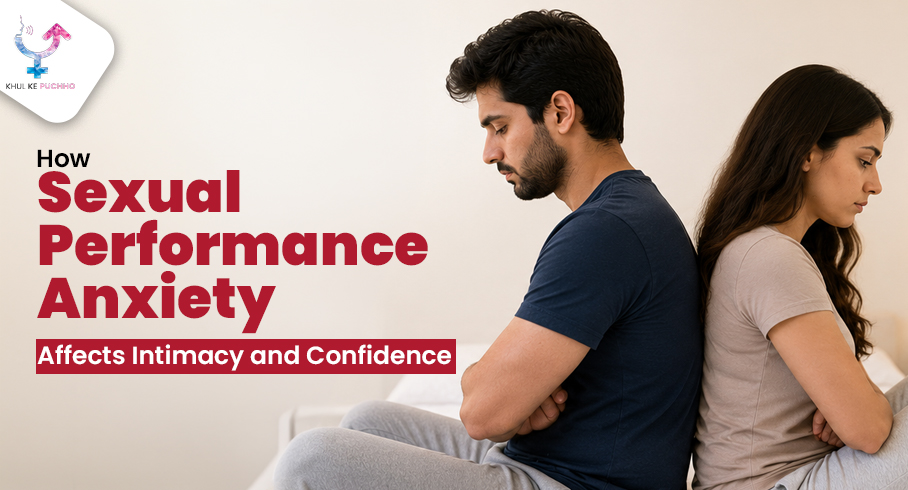
Intimacy is often considered a natural, easy language of love. But for many men the bedroom becomes a silent battleground of high expectations, self-doubt and fear. You are stuck in your head, watching your movements and nervously wondering, “Will I be able to perform tonight?” This mental weight can be overwhelming and is known as sexual performance anxiety. It can quietly destroy a man’s confidence from within.
At Khul Ke Pucho, we know that intimacy is not just physical but also an emotional experience. Anxiety overtakes the beautiful connection between two people with fear. Let’s see how this emotional burden affects your relationships, the real reason behind it, and how understanding these factors affecting sexual health can help you feel happier and more at peace.
What is Sexual Performance Anxiety?
To put it simply, sexual performance anxiety is the intense fear of not being able to perform well during intimacy. It is not a physical disease, it is an emotional block. Your mind gets flooded with questions about size, stamina or your partner’s satisfaction.

Your brain goes into a state of panic instead of being in the moment and feeling the warmth. You overthink. You become a spectator of your own private life. This mental pressure generates a vicious cycle: the more you worry about failure, the more difficult it is for your body to respond naturally.
The emotional impact on intimacy and confidence
When a man suffers from sexual performance anxiety, the effects are felt in all areas of his emotional life. It changes the way he sees himself and relates to the person he loves.
1. Loss of Self-Worth
A man’s confidence is often related to his ability to please his partner. When anxiety blocks the way, a heavy sense of shame comes down. You might start feeling like you are not good enough, broken, or like you are less of a man. This constant self-doubt gets into your everyday life, leading to a decrease in your confidence at work, with friends and even in your own skin.
2. Building Walls in Relationships
The fear of another difficult night can make a man withdraw completely. You may start to avoid physical touch, intentionally stay up late or back off when your partner comes close. This emotional distance can leave your partner feeling lonely, rejected, or confused. It creates a barrier between two people.
Understanding the Hidden Triggers
The reasons for this struggle are never one-dimensional. Often it is a combination of emotional pressures and physical vulnerabilities that work together to disturb your inner peace.
Psychological Triggers
- Fear of Judgement: The persistent thought that you are not meeting up to unrealistic standards or your partner’s expectations.
- Difficulties in the past: If something went wrong once because of a tired or stressful day, the memory of that moment can remain, becoming a fear that it will happen again.
- Stress and Fatigue: A mind that is already exhausted by financial pressures, work deadlines, or family responsibilities has no energy left to relax into a state of intimacy.
Physical Triggers
While anxiety lives in the mind, a drop in physical energy can aggravate it. In many discussions around men’s wellness, people look into common sexual weakness causes like poor blood circulation, lack of restful sleep, or hormonal drops. When your body feels physically sluggish or weak, your mind registers that vulnerability, multiplying your performance fears. Recognising these physical and mental factors affecting sexual health is the first step toward the solution.
The Ayurvedic Perspective: Calm Mind, Strong Body
Ayurveda offers a beautiful, deeply comforting perspective on this issue. It teaches us that true sexual health is impossible without a calm mind. In ancient wisdom, sexual performance anxiety is closely linked to Vata dosha (the element of air and movement) and Rajas Guna (a state of mental hyperactivity and restlessness).
When you are stressed or fearful, your Vata energy flares up. This creates instability in your nervous system, causing your thoughts to race and your blood circulation to tighten. Ayurveda reminds us that the body cannot open up when the mind is in a state of defence. Healing is not about forcing a physical result; it is about grounding your mind, soothing your nervous system, and nourishing your body’s vital essence (Ojas) through warm, stabilising routines and natural calmness.
Breaking the Cycle and Finding Peace
- Talk to Your Partner: Sharing your feelings removes the secrecy and heavy pressure. A loving partner is interested in knowing you, supporting you, and not judging you.
- Be in the moment: change your focus from the “end result” and focus on simple touch, warmth and affection.
- Calm Your Nervous System: Slow your breathing, meditate or walk every day to help lower stress hormones that freeze up your body.
- Ask for Compassionate Support: Seeking professional help is a sign of great strength.
Conclusion
Ultimately, dealing with sexual performance anxiety doesn’t change who you are or diminish your value as a partner. It’s a very human obstacle, born of stress and care. Just by talking to your partner, you can reclaim your joy.
Judgement-free platforms like Khul Ke Pucho are always there to provide you with a safe space to speak your mind openly and get proper guidance. Take a deep breath, leave the pressure outside the door, and take that first soft step in healing your heart and your confidence.

Frequently Asked Questions
Q1. What is the main cause of sexual performance anxiety in men?
Ans: This issue is an emotional block caused by intense fear of not performing well during intimacy. It triggers a cycle of overthinking and panic that stops the body from responding naturally.
Q2. How does performance anxiety affect a man’s confidence and relationship?
Ans: It creates a deep sense of shame that lowers everyday self-worth. To avoid fear, a man might pull away from physical touch, creating an emotional wall with his partner.
Q3. What are the common psychological and physical triggers for this anxiety?
Ans: Mental triggers include everyday stress, exhaustion, and fear of judgement. Physical triggers often involve general body sluggishness, poor sleep, or low energy levels.
Q4. What is the Ayurvedic view on sexual performance anxiety and weakness?
Ans: Ayurveda connects this issue to an imbalanced Vata dosha and a hyperactive mind. Stress tightens blood circulation and disturbs the nervous system, meaning the body cannot relax until the mind feels grounded.
Q5. How can couples break the cycle of performance anxiety together?
Ans: Openly talking with your partner removes the pressure. Shifting the focus from results to simple affection helps lower stress hormones so you can stay in the moment.