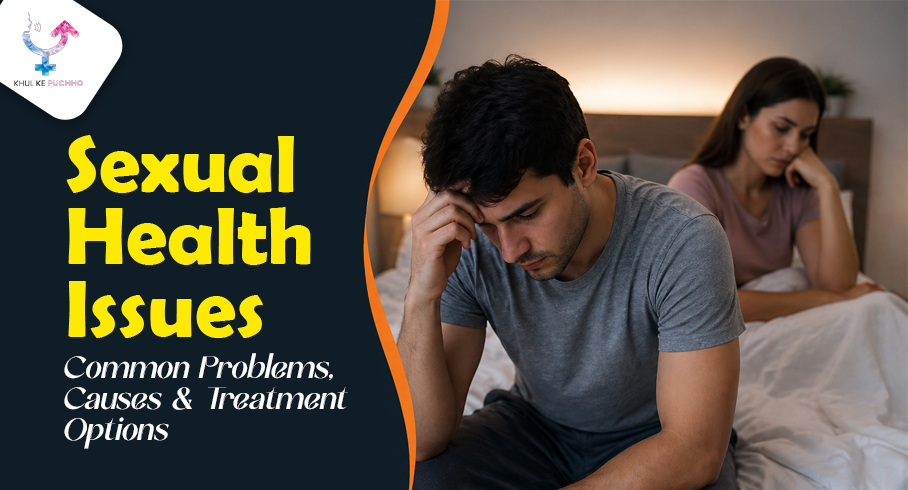
Talking about sexual health still feels a bit awkward for many people, even though it’s something a lot more people deal with than we think.
Most of the time, it doesn’t show up as something big. It starts small, such as experiencing low energy, less desire, or your confidence drops a little. It is easy to ignore, but if it keeps going, it can start affecting both physically and mentally.
That’s why it becomes important to know about sexual health Issues.
In this blog, we’ll look at common problems of sexual health, what causes them, and the options people usually consider to manage them.
What Are Sexual Health Issues in Simple Terms?
Sexual health issues are not just about performance. Sometimes it’s just a drop in interest, feeling low on energy, or things not feeling the same as they used to.
A lot of people assume it’s only a physical problem, but it’s not that simple. Stress, sleep, and your daily routine, these things quietly play a role in how your body responds.
That’s why it’s better not to look at it as just one issue. Most of the time, it’s your body trying to tell you that something isn’t really in sync.
Common Sexual Health Problems in Men and Women
There are a few sexual health issues that people go through, even if they don’t always talk about them openly:
In men:
- Trouble maintaining an erection (ED)
- Ejaculation happens too quickly or takes longer than expected
- A noticeable drop in sexual interest
- Conditions like Peyronie’s that can cause discomfort
In women:
- Lower interest, often linked to stress or hormonal changes
- Discomfort or pain during sex
- Difficulty reaching orgasm
- Changes related to hormonal imbalance
- Infections like STIs can also play a role and may show up as irritation or discomfort
These issues are more common than they seem, and most of the time, they don’t appear suddenly; they build up gradually.
What Causes Sexual Health Issues?
When we talk about Sexual Health Issues, it’s rarely just one cause. Most of the time, it’s a combination of different factors affecting sexual health.
1. Physical Causes
Sometimes it’s linked to what’s going on in the body. Ongoing health issues, low energy, or even certain medicines can slowly affect performance or interest without it being obvious at first.
2. Psychological Causes
Your mental state plays a big role, too. Stress, overthinking, or tension in a relationship can take up so much space in your mind that your body just doesn’t respond the same way.
3. Lifestyle Factors
This is where a lot of people underestimate the impact. Smoking, alcohol, poor diet, lack of exercise, and irregular sleep patterns are some of the common Factors Affecting Sexual Health.
These everyday habits are also major Sexual weakness Causes, even though they don’t seem serious at first.
The important thing to understand is that these issues don’t happen overnight. They build slowly, which is why they’re often ignored until they become noticeable.
How Sexual Health Issues Affect More Than Just Physical Health
Sexual health is not just about the body; it also affects how you feel on the inside.
- Confidence drops – It’s not just about that one situation. Slowly, you may find yourself second-guessing things in general, even outside your personal life.
- It affects the relationship – You might avoid certain conversations or feel a bit distant. Sometimes it’s just the hesitation that creates that gap.
- Stress builds quietly – The more you think about it, the more it starts bothering you. And that stress ends up making things feel even harder the next time.
Treatment Options: What People Usually Consider
There are different ways people try to manage these issues, depending on the cause.
-
Medications
In some cases, doctors may suggest medicines for erection issues or hormone-related concerns. They can help, but they’re usually just providing a quick fix, not a long-term solution.
-
Therapy & Counseling
If stress, overthinking, or relationship issues are happening, talking with a professional can really help. Sometimes just understanding what’s going on mentally makes a noticeable difference.
-
Medical Procedures (if needed)
For some people, the issue goes a bit deeper, and other treatments might be suggested. This could include certain procedures or support methods, depending on what’s actually causing the problem.
Can Sexual Health Issues Be Managed Naturally?
A lot of the time, small changes to your daily life can have a big effect.
Getting enough sleep, eating healthy meals, dealing with stress, and staying active all help the body stay in balance.
There is no quick fix here. But when you stick to small habits, your body often works better.
This method is more about long-term stability than quick results.
When Should You Pay Attention?
You might want to pay attention if you notice:
- Constant low energy
- Reduced interest
- Repeated performance-related concerns
These are not always serious on their own, but if they continue, it’s a sign that something needs attention.
Conclusion
Most Sexual Health Issues don’t just show up one day out of nowhere. They usually build up slowly through daily habits, stress, or things we tend to ignore for too long.
The tricky part is, you often don’t notice it at first. It’s only when it starts repeating that you realise something’s off.
The good thing, though, is that it doesn’t always take big changes to start fixing it. Sometimes just paying attention, sleeping, routine, and how you’re feeling can already make a difference.
If you’ve been noticing that drop for a while, it’s probably not something to just ignore. You don’t have to figure everything out on your own. Khul Ke Pucho experts can help you understand what’s going on and guide you towards the right path.